

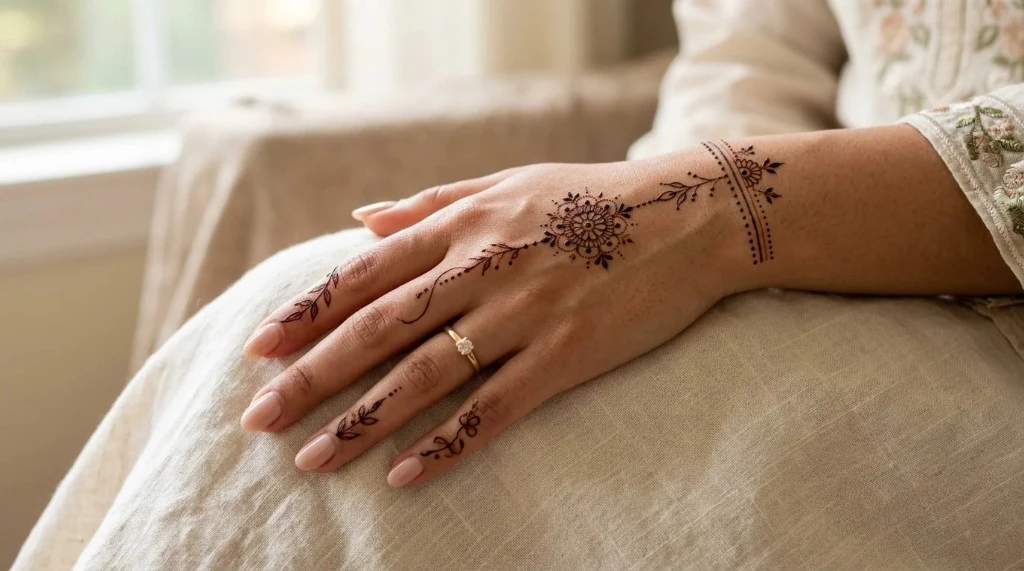
For years, bridal mehendi followed a simple rule: more coverage meant a better design. Full-hand patterns, dense fillers, hidden initials, and heavily packed artwork were the standard. In 2026, that preference is shifting. Modern brides are moving toward minimalist henna designs that use negative space, cleaner motifs, fine-line work, and deliberate composition instead of maximum density. The change aligns with broader bridal styling. As outfits, jewellery, and makeup have become more refined, mehendi is evolving to complement rather than compete with them.
Why Are Brides Choosing Cleaner Designs?
Modern bridal looks already carry strong visual elements: statement jewellery, embroidered lehengas, layered drapes, and polished makeup. Extremely dense mehendi can make the overall appearance feel heavy. Minimalist designs create breathing room. Cleaner patterns allow jewellery to stand out, outfit details to remain visible, and portraits to look softer and more composed. The result is balance. The mehendi supports the rest of the bridal styling instead of dominating it.
Less Filler, More Intentional Artistry
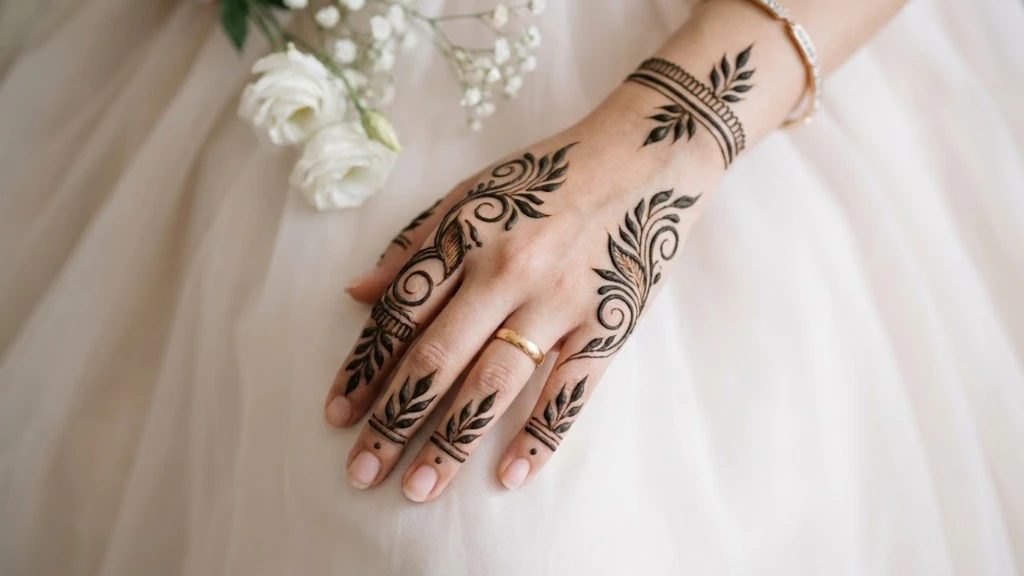
Minimalist henna is not necessarily simple. Many designs require greater precision in placement, symmetry, and line work. Artists are focusing on:
- Negative space and open layouts
- Delicate florals and lotus motifs
- Fine-line Arabic-inspired trails
- Finger-focused detailing
- Jaali patterns with breathing room
- Modern mandala and geometric compositions
These styles look lighter from a distance but reveal careful craftsmanship up close. Brides are drawn to them because they feel elegant without appearing excessive.
Photography and Visual Impact
Wedding photography has moved toward close-up portraits, softer lighting, and editorial-style imagery. Minimalist mehendi performs well in this environment. Dense patterns can lose definition in photos, especially against heavily embroidered outfits. Cleaner designs with negative space create stronger contrast, making rings, bangles, kaleere, and hand poses more visible and elegant on camera. Brides are increasingly conscious of how every detail translates in photographs and videos, which has accelerated the preference for designs that remain crisp and defined.
Practical Advantages: Time and Comfort
Traditional full-hand bridal mehendi often requires 6–10 hours and multiple sessions. Minimalist designs significantly reduce application time while still delivering a polished bridal look. With packed schedules involving fittings, pre-wedding shoots, events, and guest interactions, many brides prefer options that are less physically demanding yet still feel special.
How It Pairs with Current Bridal Fashion?
Minimalist mehendi aligns with the softer, more contemporary direction in bridal wear. It works particularly well with:
- Magenta, blush, and rose-gold palettes
- Cleaner silhouettes and lighter draping
- Dewy makeup
- Statement yet refined jewellery (including polki)
A delicate floral or finger-focused design paired with modern styling creates a cohesive, editorial result where no single element overwhelms the others.
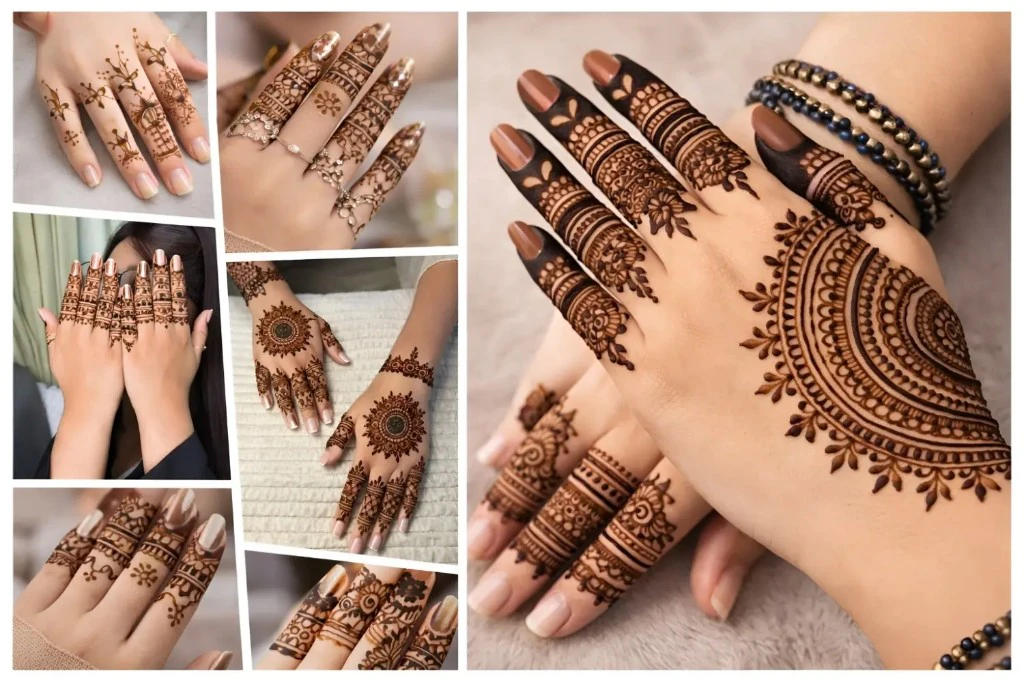
Finger-Focused and Personal Details
One of the strongest current variations is detailed finger work with lighter palm coverage. Intricate fingertips, ring-style patterns, and fine floral trails look especially effective with engagement rings and stacked jewellery, and they photograph cleanly in close-ups. Personal elements have not disappeared. Brides continue to include initials, meaningful symbols, dates, or family motifs. The difference is in presentation: these details are integrated more subtly into cleaner compositions rather than packed into dense layouts.
What Artists Are Seeing?
Demand has pushed many mehendi artists to refine fine-line, negative-space, and contemporary Arabic techniques. Brides increasingly arrive with reference boards emphasising elegance, symmetry, and softness rather than full coverage. Social platforms have sped up this shift, making minimalist styles both widely visible and easily requestable.
Final Thoughts
Minimalist henna is gaining ground because bridal styling itself has become more intentional. Brides are looking for mehendi that feels elegant, wearable, meaningful, and balanced with the rest of their look. In a category long defined by maximum detail, the appeal of cleaner designs lies in their ability to enhance rather than overpower, leaving space for jewellery, outfit, and personal expression to coexist clearly.
Reader conversations (0)