
The Classic Wedding Cake Is No Longer the Main Character
For years, wedding cakes followed a very predictable formula.
Tall white tiers.
Fondant flowers.
Perfect symmetry.
A quick cake-cutting moment for photos… and then most guests barely touched the cake afterward.
But modern weddings are changing — and dessert tables are changing with them.
In 2026, couples are moving away from overly traditional wedding cakes and embracing desserts that feel more artistic, interactive, and personal. Instead of one massive cake sitting untouched in a corner, weddings are now featuring curated dessert experiences filled with:
- geometric cakes,
- edible florals,
- textured buttercream finishes,
- mini desserts,
- artisanal pastries,
- and beautifully styled dessert tables that guests actually get excited about.
And honestly, it makes sense.
Modern weddings are becoming far more experience-driven. Couples don’t just want desserts that look impressive in photos. They want desserts that feel intentional, memorable, and genuinely enjoyable for guests too.
Why Couples Are Moving Beyond Traditional Tiered Cakes
The classic multi-tier wedding cake isn’t disappearing completely, but it’s definitely evolving.
One of the biggest reasons is practicality.
At large weddings, guests rarely sit down waiting for formal cake service anymore. Events flow differently now:
- people move between dance floors,
- cocktail bars,
- interactive food stations,
- and lounge areas throughout the night.
Because of that, couples are choosing dessert setups that feel easier to enjoy casually rather than one oversized cake that becomes more decorative than functional.
Pastry chefs are also noticing that couples now care more about:
- flavour variety,
- presentation,
- guest interaction,
- and overall visual storytelling.
Desserts are becoming part of the wedding aesthetic itself — not just a final formality.
Geometric Cakes Are Replacing Traditional Designs
One of the biggest cake trends dominating 2026 weddings is geometric cake styling.
Instead of heavily traditional piping and classic floral fondant work, couples are choosing cakes with:
- sharp edges,
- sculptural textures,
- asymmetrical tiers,
- metallic accents,
- abstract detailing,
- and architectural shapes.
These cakes feel modern, fashion-forward, and almost gallery-inspired.
Many pastry artists are taking inspiration from:
- luxury fashion,
- contemporary interiors,
- editorial design,
- and modern art rather than traditional bakery aesthetics.
Some of the most popular geometric cake styles right now include:
- square and hexagon tiers,
- floating-layer cakes,
- textured buttercream finishes,
- acrylic separators,
- and monochromatic sculpted designs.
The result feels elevated without looking overly formal.
And honestly, these cakes fit beautifully into modern wedding aesthetics, especially with the rise of minimalist luxury and editorial-style décor.
Edible Flowers Are Everywhere Right Now
Florals have always been part of wedding desserts, but edible flowers are being used very differently in 2026.
Instead of overly decorative sugar flowers, pastry chefs are using real edible blooms to create desserts that feel softer, fresher, and more organic.
Some of the most popular edible flowers appearing on wedding cakes and dessert tables include:
- pansies,
- roses,
- lavender,
- marigolds,
- orchids,
- chamomile,
- and hibiscus petals.
These floral details bring texture, colour, and movement to desserts without making them look overly styled.
And because modern weddings are leaning heavily toward natural aesthetics and garden-inspired styling, edible flowers fit perfectly into the visual direction couples are already embracing.
They also photograph beautifully under natural lighting, which explains why they’ve become such a favourite in editorial wedding photography.
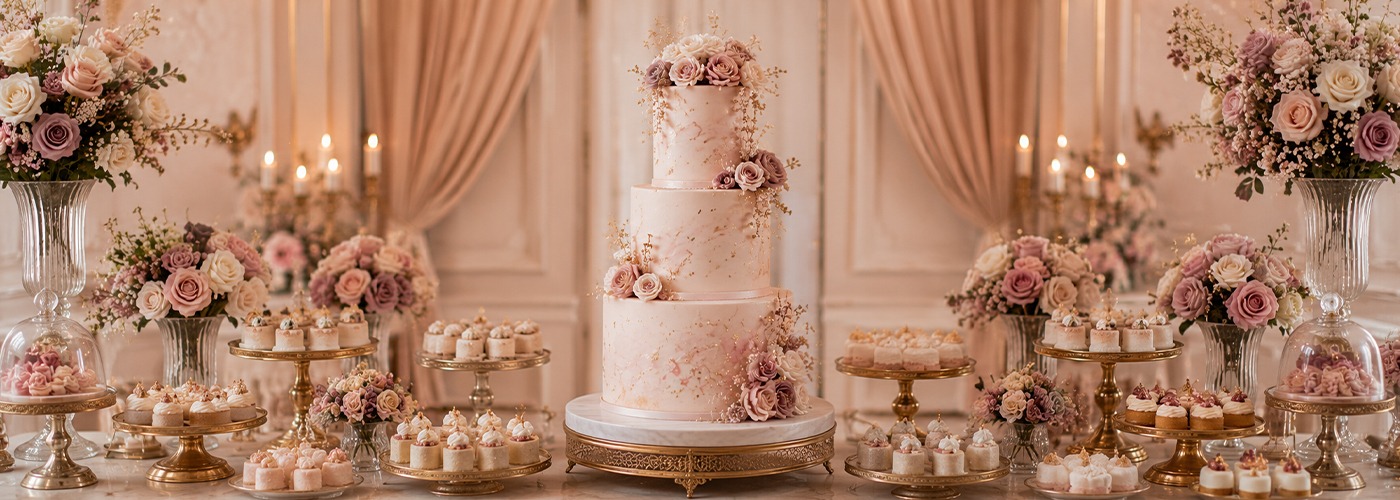
Dessert Tables Are Becoming Full Design Installations
One of the biggest wedding shifts right now is that dessert tables are no longer treated like an afterthought.
They’re becoming focal points.
Instead of placing a cake beside the dance floor with a few cupcakes around it, couples are creating fully styled dessert experiences complete with:
- layered displays,
- floral installations,
- textured linens,
- candle styling,
- customized signage,
- and curated colour palettes.
In many weddings, the dessert table now feels almost like an extension of the décor itself.
Some couples are even replacing the traditional cake entirely with:
- mille-feuille towers,
- croquembouche displays,
- macaron walls,
- artisanal pastry bars,
- gelato carts,
- or miniature dessert stations spread across the venue.
The goal is to create something interactive and visually memorable instead of purely ceremonial.
Guests Want Variety More Than One Giant Cake
Another reason dessert tables are evolving is because guest preferences have changed significantly.
People enjoy variety now.
Instead of one universal cake flavour for 300 guests, couples are offering multiple dessert experiences so guests can choose what they actually enjoy.
Popular wedding dessert table additions right now include:
- mini cheesecakes,
- tiramisu cups,
- gourmet brownies,
- handcrafted chocolates,
- macarons,
- bite-sized tarts,
- dessert shooters,
- and regional Indian fusion desserts.
At Indian weddings especially, pastry chefs are blending traditional flavours into modern dessert formats:
- rasmalai tres leches,
- gulab jamun cheesecake,
- saffron panna cotta,
- rose pistachio cakes,
- and cardamom-infused pastries are all becoming increasingly popular.
This mix of familiarity and modern presentation feels far more exciting to guests than a standard vanilla wedding cake.
Buttercream Cakes Are Making a Huge Comeback
After years of ultra-smooth fondant cakes dominating weddings, textured buttercream designs are returning in a major way.
And honestly, people are loving them because they feel more human.
Buttercream cakes look softer, more organic, and less artificial compared to heavily structured fondant cakes. They bring movement and texture into the design while still looking luxurious.
Couples are especially gravitating toward:
- palette knife textures,
- hand-painted finishes,
- pearl detailing,
- soft ombré tones,
- and imperfect floral styling.
This shift mirrors what’s happening across weddings overall:
people are moving away from overly polished perfection and embracing details that feel warmer and more natural.
Colour Is Playing a Bigger Role in Wedding Desserts Too
As wedding décor trends shift toward:
- magenta,
- blush,
- rose gold,
- saffron,
- and earthy romantic tones,
dessert styling is following the same direction.
Cakes are no longer just white.
Pastry chefs are incorporating:
- dusty pink buttercream,
- berry tones,
- metallic rose accents,
- chocolate textures,
- and monochromatic palettes into wedding desserts.
Some couples are even coordinating their cake design directly with:
- bridal outfits,
- floral installations,
- or wedding stationery to create a more cohesive visual aesthetic.
This attention to detail makes the entire wedding feel more intentional and immersive.
Smaller Cakes Are Becoming More Popular
Interestingly, many luxury weddings now feature smaller display cakes alongside larger dessert spreads.
The cake itself becomes more symbolic and artistic rather than the primary dessert source for every guest.
This allows couples to:
- invest in better craftsmanship,
- experiment with bold designs,
- and create visually striking cakes without worrying about massive serving portions.
Meanwhile, guests enjoy the larger dessert table separately.
It’s a much more flexible and modern approach — and honestly, far less wasteful too.
Wedding Desserts Are Becoming More Personal
Perhaps the biggest dessert trend of all is personalization.
Couples no longer want generic wedding cakes that could belong to anyone. They want desserts that reflect:
- their personalities,
- favourite flavours,
- cultures,
- travel memories,
- or shared experiences.
Some couples are recreating desserts from their first date.
Others are adding family recipes into modern pastry formats.
Some are building dessert menus inspired by cities they’ve travelled to together.
That emotional connection makes the experience feel far more memorable for guests too.
Because people may forget the exact cake design eventually.
But they remember how a wedding made them feel.
Final Thoughts
Wedding desserts in 2026 are no longer just about tradition.
They’re about experience, storytelling, and atmosphere.
Geometric cakes, edible flowers, curated dessert tables, and personalized pastries are replacing the idea that weddings need one massive formal cake to feel luxurious.
Modern couples want desserts that:
- taste incredible,
- photograph beautifully,
- feel interactive,
- and actually excite guests.
And honestly, this shift feels refreshing.
Because the best wedding details are rarely the ones that simply look expensive.
They’re the ones people genuinely enjoy experiencing together.
Reader conversations (0)