

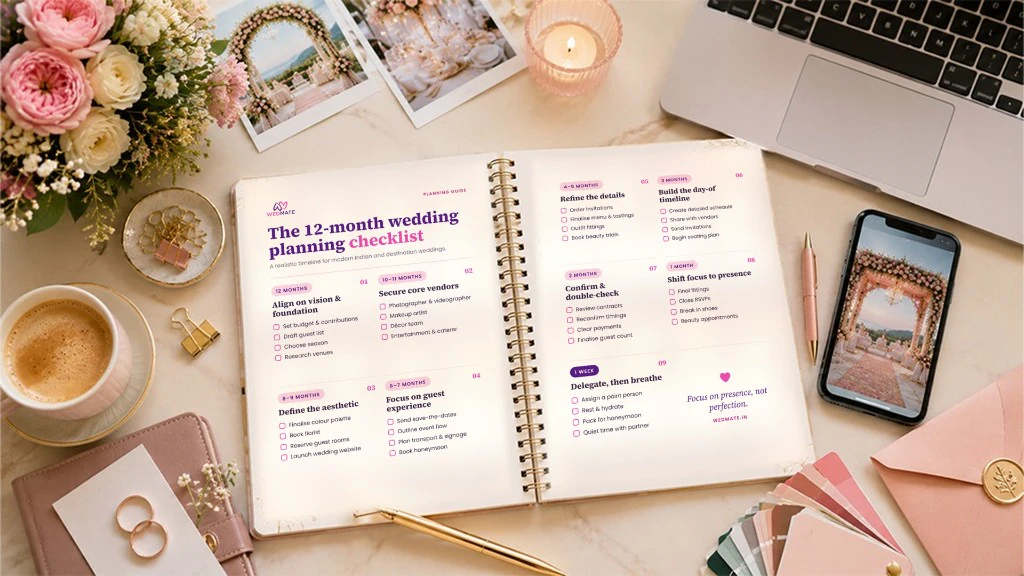
Most couples begin wedding planning with a clear sense of excitement. Within a few weeks, that energy is often replaced by a long list of decisions, venues, guest numbers, budgets, outfits, and family expectations, arriving all at once. The pressure builds not because the tasks are complicated on their own, but because they arrive without a clear sequence. A realistic timeline spreads those decisions across the year so the final months are spent refining details rather than making them under pressure. This checklist is written with modern Indian and destination weddings in mind. These celebrations are rarely single-day events. They involve multiple functions, guest travel, and a higher volume of coordination than a simple ceremony-plus-reception format. The goal is not to turn planning into a project. It is to create enough structure that the process remains manageable and the couple still has space to enjoy the year leading up to the wedding.
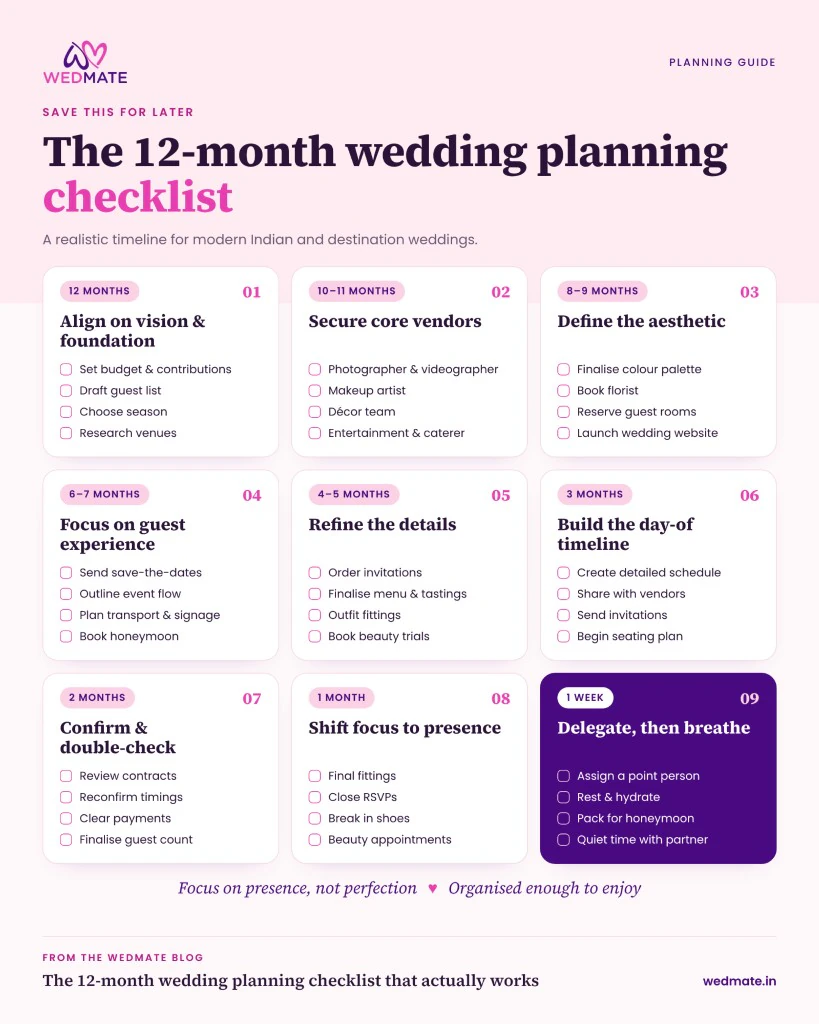
12 Months Before — Align on Vision and Foundation
Before any vendor is contacted, it helps to have an honest conversation about the kind of wedding you actually want. Some couples picture a large, traditional gathering with extended family and multiple rituals. Others prefer something smaller and more intimate, or a destination format that brings people together over a few days. Clarifying this early prevents later friction when one person is optimising for scale and the other is optimising for experience. Once both of you are clear on the overall feeling of the day, practical decisions become easier to make together.
Once the overall direction feels clear, the practical foundation can be laid:
- Set a realistic overall budget and clarify who is contributing financially
- Draft a preliminary guest list (even if numbers will change)
- Choose your preferred season or month
- Research and shortlist venues
- Create a shared planning spreadsheet for costs, deadlines, and contacts
- Book your venue and high-demand vendors (photographer, videographer) if peak dates are involved
Peak-season vendors and popular venues are often booked 12–18 months ahead. Securing these early removes one of the largest sources of later stress and gives you more choice rather than settling for what remains available.
10–11 Months Before — Secure Core Vendors
With the date and venue confirmed, the wedding starts to feel concrete. This is the right time to lock in the people who will actually deliver it. Many couples find that the vendors they enjoy working with most are not always the ones with the most polished portfolios, but the ones who communicate clearly and understand the realities of multi-day Indian weddings. Outfit shopping often begins here as well. Custom bridal wear typically requires multiple fittings and production time, so starting early reduces the chance of rushed decisions and last-minute compromises later.
Priority bookings include:
- Photographer and videographer
- Makeup artist
- Décor team
- DJ or entertainment
- Caterer
- Planner or day-of coordinator (if using one)
8–9 Months Before — Define the Aesthetic
By this point, most of the major bookings are in place and attention can turn to how the wedding will look and feel. Finalising a colour palette, floral direction, and overall visual style helps the different elements like décor, stationery, outfits, and photography feel connected rather than assembled from separate ideas. Couples who take time with this stage usually find that later decisions (from invitation design to table styling) become simpler because there is already a clear visual language to refer back to.
Key tasks at this stage:
- Finalise colour palette and floral direction
- Create a mood board or visual reference
- Book the florist
- Reserve guest accommodation or room blocks
- Launch a simple wedding website with logistics, dress code, and schedule
Guests will ask the same questions repeatedly about dress code, timing, where to stay. A single page with those answers saves months of individual replies and reduces the chance of confusion closer to the date.
6–7 Months Before — Focus on Guest Experience
As the wedding draws closer, the emphasis naturally shifts from how the day will look to how it will feel for the people attending. Smooth logistics, clear communication, and thoughtful flow tend to matter more to guests than perfect styling. This is also the stage where many couples realise that guest comfort — transportation, clear timings, and basic wayfinding — has a bigger impact on the overall atmosphere than additional decorative elements.
Focus on:
- Send save-the-dates
- Book honeymoon travel if desired
- Finalise bridal party outfits
- Outline the rough ceremony and event flow
- Plan transportation, welcome details, and basic signage
4–5 Months Before — Refine Details
The wedding now exists beyond ideas. Decisions become more specific, and this is also when planning fatigue often appears. Conversations about the wedding can start to dominate the relationship if every evening is spent discussing menus or seating. Protecting some time that has nothing to do with the wedding helps keep the process sustainable and reminds both of you why you are planning this in the first place.
Tasks include:
- Order invitations
- Finalise the menu and schedule tastings
- Complete outfit fittings
- Book beauty trials
3 Months Before — Build the Day-Of Timeline
A clear schedule is one of the most effective ways to reduce chaos on the day itself. Mapping out the sequence and sharing it with every vendor prevents overlapping expectations and last-minute confusion. Couples who invest time in a realistic timeline usually find that the day feels calmer, even when small things shift, because everyone involved already understands the intended flow.
Create a detailed timeline covering:
- Makeup and getting-ready timing
- Photography slots
- Baraat or processional timing
- Ceremony schedule
- Entrances and first looks
- Dinner flow and speeches
- Dance floor opening
Also complete:
- Send formal invitations
- Finalise music selections
- Begin seating arrangements
- Confirm transportation plans
2 Months Before — Confirm and Double-Check
Most of the creative decisions are already made. The work now is confirmation. Assumptions are the most common source of last-minute problems — a vendor who thought a timing had changed, a payment that was never fully closed, or a guest count that no longer matches the original estimate. Taking the time to reconfirm everything reduces the chance of these issues appearing in the final weeks.
Confirm the following:
- Review all contracts
- Reconfirm vendor timings
- Clear pending payments
- Finalise guest counts
- Organise emergency kits
- Prepare bridal party gifts
- Pack backup essentials
1 Month Before — Shift Focus to Presence
At this point, the difference between a good wedding and a stressful one is rarely a missing detail. Guests tend to remember the atmosphere and the couple’s energy more than minor imperfections in décor or timing. This is the stage where many couples begin to feel the weight of expectations. Focusing on what actually matters to you — rather than what might look perfect in photographs — helps keep the remaining weeks more manageable.
Final tasks:
- Attend final fittings
- Confirm remaining vendor details
- Close RSVPs
- Break in wedding shoes
- Complete outstanding beauty appointments
1 Week Before — Delegate
This is the week to hand over day-to-day coordination. Assigning a trusted person or planner to handle vendor calls allows the couple to step back from management mode. Rest, hydration, and quiet time with your partner matter more than last-minute adjustments. The weddings that feel most present are usually the ones where the couple has already stepped away from operational details by this stage.
Prioritise:
- Assign a point person for vendor coordination
- Rest and hydrate
- Pack for the honeymoon (if applicable)
- Spend quiet time with your partner
Day Before and Wedding Day
By the night before, most decisions are already made. Eating properly, staying hydrated, and handing over remaining responsibilities is more useful than trying to solve problems that will not meaningfully affect the day. On the wedding itself, the schedule moves quickly. Small, intentional pauses, looking around the room, speaking with parents, or standing with your partner, tend to stay in memory longer than whether every element matched the original plan. The couples who feel most present on their wedding day are usually the ones who locked the venue and core team early and then stepped back from day-to-day coordination in the final weeks,” says a wedding consultant at ShadiEvents, which works on luxury and NRI weddings across India. “Once those foundational pieces are in place, everything else becomes easier to manage. The details that feel urgent the night before rarely shape how the day is remembered
Final Thoughts
No wedding runs without some adjustments behind the scenes. A structured timeline does not remove every source of stress, but it reduces the number of decisions that feel urgent in the final weeks. The aim is a celebration that feels organised enough to enjoy, rather than one that demands constant management from the couple. The year leading up to the wedding is also part of the experience. A clear sequence simply makes it easier to move through that year without losing the reason you started planning in the first place.
Frequently Asked Questions
When should we start planning a wedding?
Ideally 10–12 months before the date, especially for peak-season Indian or destination weddings. Starting earlier gives better access to venues and key vendors and reduces last-minute pressure.
Do we need a wedding planner?
Not always. Many couples manage the process themselves with a clear timeline. A planner is most useful when the wedding involves multiple days, destination logistics, or a high volume of vendor coordination, and when the couple prefers to stay less involved in day-to-day management.
How early should we book the venue and photographer?
For popular destinations and peak months (October–March in Rajasthan, winter in Goa), 12–18 months is common. Booking these two elements early removes one of the biggest sources of later stress.
When should we send save-the-dates and invitations?
Save-the-dates are typically sent 6–8 months before the wedding. Formal invitations usually go out 6–8 weeks before the date.
How do we handle a large guest list with destination travel?
Finalise a realistic guest number early, reserve room blocks, and share clear travel and stay information through a wedding website. The smoother the logistics, the more comfortable guests tend to feel.
What is the most common source of last-minute stress?
Unconfirmed details — vendor timings that were never rechecked, payments left open, or guest counts that shifted without being updated. Double-checking everything two months before the wedding prevents most of these issues.
When should we start shopping for bridal outfits?
Around 10–11 months before the wedding for custom work. Production, embroidery, and multiple fittings take time, and starting early avoids rushed decisions.
How can we reduce planning fatigue?
Protect some non-wedding time as a couple, especially in the middle months. Delegating operational tasks in the final weeks also helps the couple stay present rather than managing every detail.
Is a day-of timeline really necessary?
Yes. A clear schedule shared with all vendors is one of the most effective ways to keep the day calm. It reduces overlapping expectations and last-minute confusion.
What matters most to guests on the day?
Atmosphere, clear logistics, and the couple’s energy. Most guests notice comfort and flow more than minor decorative imperfections.
Reader conversations (0)