


Destination weddings in India now form a substantial part of the overall wedding market. Celebrations in Udaipur, Jaipur, Goa, Kerala, Jodhpur, and other established locations typically run for three or more days, host between 200 and 500 guests, and require simultaneous coordination of venue, accommodation, multiple vendors, guest travel, and ritual requirements. Unlike a wedding held in the couple’s home city, a destination wedding relocates the entire event, and a large portion of the guest list, to one place. This single change multiplies the number of moving parts and the dependencies between them. In this setting, a wedding planner functions as the central coordinator. The planner connects venue contracts, vendor execution, design and pacing, guest logistics, and on-ground management so that decisions made in one area do not create problems in another. Without that integration, accountability spreads across the venue team, individual vendors, transport providers, and the couple’s own follow-ups, increasing the chance of gaps, especially in the final weeks.
Why Destination Weddings Are More Complex?
Several structural factors make destination weddings more demanding than local ones. Guests are travelling, so arrival times, airport transfers, hotel check-ins, and daily movement between functions must be planned and communicated in advance. Venues in high-demand destinations operate with limited inventory during peak season (commonly October to March in Rajasthan and the winter months in Goa). Room blocks, exclusive-use dates, and function timings are negotiated contractually and can change availability quickly. Local rules of the place like noise restrictions, load-in windows, beach or heritage-property regulations, differ by location and are not always apparent until a contract is reviewed.
Many couples are also planning from another city or from outside India. This adds a layer of remote decision-making: venue walkthroughs, design approvals, and vendor selections must happen through calls, shared documents, and visual references rather than repeated site visits. Each of these elements can be managed on its own. The difficulty arises because they interact. A delayed rooming list affects guest communication and transfer planning. A décor concept that ignores a venue’s access or timing rules creates last-minute rework. Unclear responsibility for airport arrivals leaves guests unmanaged on the day. The planner’s primary contribution is to keep these connections visible and resolved before they become on-site problems. Additional pressure comes from the compressed nature of the event itself. Once guests arrive, the wedding typically unfolds over three to five consecutive days with limited recovery time between functions. Any misalignment in timing, access, or vendor readiness becomes immediately visible to a large number of people. In a home-city wedding, some of these issues can be absorbed by local family support or last-minute adjustments using nearby resources. At a destination, those buffers are smaller.

What are the Core Responsibilities of a Destination Wedding Planner?
The day-to-day work of a destination wedding planner usually covers the following areas:
- Venue identification and contracting: Shortlisting properties that can accommodate the guest count, the required rituals, and a multi-day format; arranging evaluations (in person or through detailed video and documentation); and negotiating room blocks, exclusivity, commercial terms, and operational timings.
- Accommodation and guest hospitality: Managing the room inventory, preparing allocation lists, coordinating welcome arrangements, and ensuring check-in processes align with arrival patterns.
- Vendor selection and alignment: Choosing caterers, décor teams, entertainment, photographers, and logistics partners who have executed similar-scale events at the destination, then synchronising their schedules with the venue and with each other.
- Design and multi-day flow: Reviewing décor, lighting, and layout plans so they remain consistent across functions and respect the venue’s physical and timing constraints.
- Guest logistics: Planning airport or station transfers, inter-function movement, and any local permits required for processions or outdoor elements.
- On-ground management: Maintaining the overall run-of-show during the wedding days, acting as the single point of contact for the venue and vendor teams, and handling adjustments as they arise.
- Remote coordination: Supplying regular status updates, visual approvals, and structured decision points so couples who are not based at the destination can still direct the wedding without constant travel.
These responsibilities are linked. A planner adds value mainly by ensuring that a decision in one area (for example, a change in function timing or a reduction in expected guests) is reflected in the plans of every other party affected by it. In the weeks immediately before the wedding, this coordination function becomes especially active as final counts, rooming lists, and vendor call times are locked.
How the Wedding Planner Interacts with Different Parties?
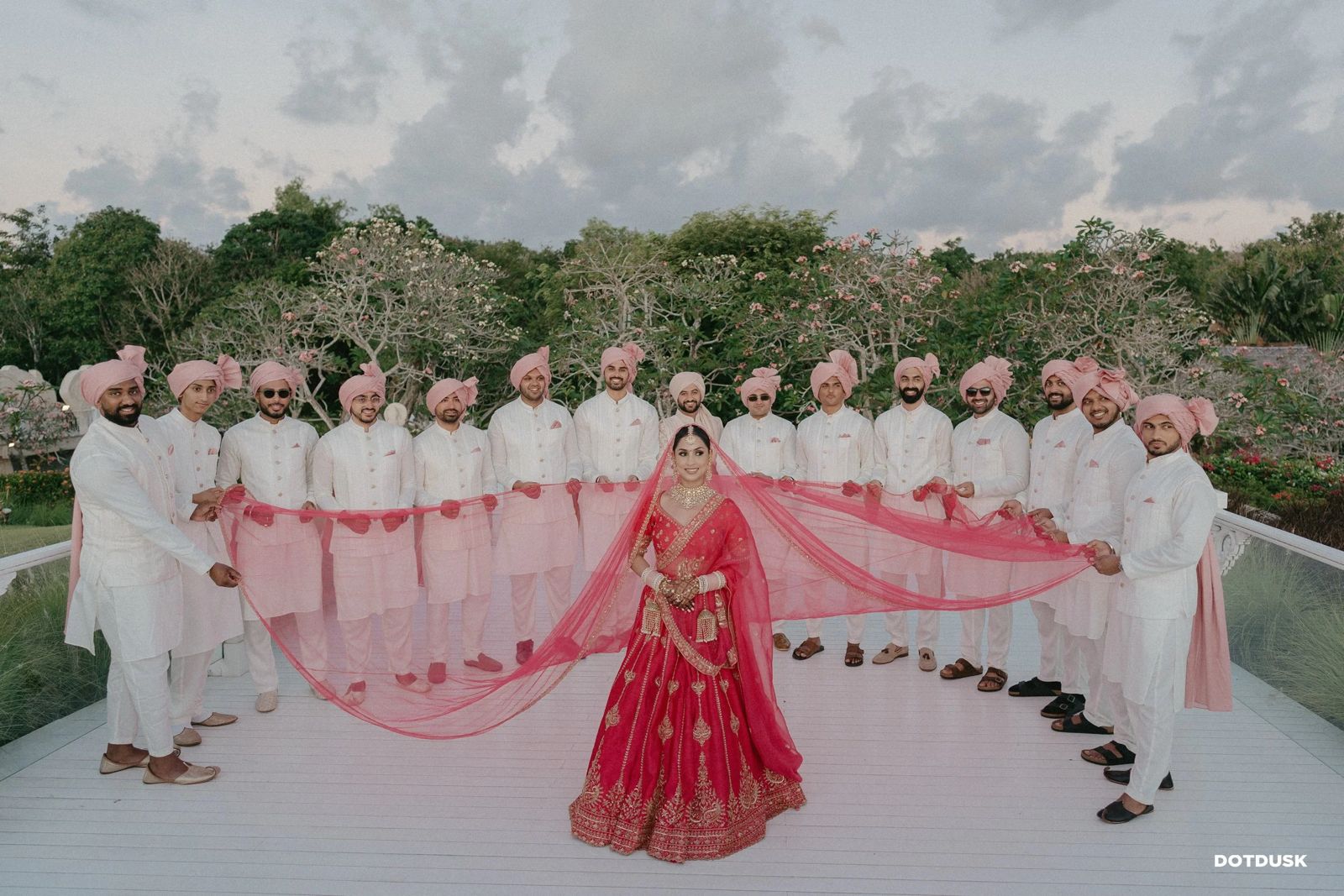
A destination wedding brings together groups that do not normally work as a single unit. The couple and family define priorities, approve budgets, and make final choices on design and rituals. The venue controls access, load-in slots, house rules, and often the catering or banqueting relationship. Individual vendors deliver specific components but may have limited visibility of the full programme. Transport providers and the hotel’s front office manage guest movement and rooms. Photography and content teams need scheduled access that does not collide with rituals or other installations. The planner’s ongoing task is to convert the couple’s requirements into clear, timed instructions for each group and to identify conflicts while they can still be adjusted. Typical examples include a décor install that overlaps with the venue’s preparation window, transfer schedules that do not match the start of a function, or a rooming list that has not been updated after a change in guest numbers. By holding the current version of the plan, the planner reduces the need for the couple to reconcile differing updates from multiple sources. This becomes particularly useful when family members in different cities or countries are providing input; the planner can consolidate feedback against the actual constraints of the venue and vendors rather than allowing parallel conversations to create conflicting instructions.
Considerations That Vary by Destination
Operational details differ across locations, which is why prior experience in the specific destination matters. In Udaipur and Jaipur, many palace and heritage hotels maintain strict load-in and exclusivity rules and see high demand for peak-season dates; room blocks for 150–300 guests can require early commitment and may involve minimum spend or food-and-beverage guarantees. Goa resort weddings often involve outdoor or beach regulations, weather contingencies, and a guest experience that balances structured functions with leisure time. Properties may also have limits on external vendors or specific hours for music. Kerala and certain hill destinations add questions of road access, seasonality, and the depth of the local vendor market for large events; reliable large-scale catering or décor teams may be fewer, making advance booking more important.
A planner who has already delivered weddings in that location knows which constraints are fixed, which venues and vendors reliably handle the required scale, and how local permissions are typically obtained. This knowledge shortens the discovery period that would otherwise occur after contracts are signed and reduces the likelihood of assumptions that do not hold on the ground.
Budget and Timeline Implications
Destination weddings also concentrate spending. Venue and accommodation together frequently account for 30–40 percent or more of the total budget once room blocks and multi-day usage are included. Because these commitments are often made earliest, later changes become expensive. A planner who tracks costs against the original scope can flag when a design revision, an increase in guest numbers, or an added logistics requirement will push a category beyond its allocation while there is still time to adjust. Couples managing vendors directly sometimes discover these overruns only when final invoices arrive. On timing, most peak-season destination dates benefit from engagement 12–18 months in advance. This window allows proper venue due diligence, room-block negotiation, and vendor booking before the preferred inventory is gone. Shorter timelines remain possible in shoulder seasons or less saturated destinations, but the range of available properties and the ability to negotiate terms are both narrow.
What are the Practical Benefits of Choosing a Wedding Planner?
Couples who hire a wedding planner for destination weddings typically gain clearer budget tracking, because vendor and venue costs are consolidated and monitored against the original scope. First, budget tracking is tighter because venue, vendor, and logistics costs are collected against an agreed scope rather than accumulating through separate conversations. Second, the guest experience is more uniform: arrivals, rooms, transfers, and function timings are coordinated instead of being left to individual providers. Third, decision-making remains possible even when the couple is based elsewhere, because one party maintains the status of all workstreams and can present options together with the relevant constraints. Managing the same set of relationships directly, while located in another city or country, increases the likelihood of overlooked details, particularly once the wedding is inside the final four to six weeks and the volume of small confirmations rises. Family members who are helping from different locations also have a single reference point rather than needing to contact multiple vendors themselves.
What to Evaluate When Choosing a Planner?
When selecting a planner, evidence of completed weddings in the chosen destination is more relevant than a broad portfolio. Couples typically look for work at a comparable guest count and format, a documented communication and approval process, clarity on professional fees and what they cover, and confirmation that a team will be physically present on site. It is also useful to understand how the planner structures remote reviews, frequency of calls, format of visual updates, and how decisions are recorded, especially if the couple will be approving most elements from another city or country. Planners who regularly support both domestic and NRI clients also tend to have established methods for these remote reviews, which reduces uncertainty for families who cannot make multiple trips before the wedding.
Which are the Top 10 Luxury Wedding Planners in India?
There is no official or definitive ranking of the top luxury wedding planners in India. Lists vary by publication and are usually based on portfolio visibility, celebrity work, media features, or industry mentions. Here is a compiled list of 10 planners or companies that are frequently referenced in recent industry coverage, media features, and destination wedding discussions (2024–2026). This is not a ranked order.
- The Wedding Company
- Shaadi Squad
- ShadiEvents
- A New Knot
- Shreem Events
- Weddings by Neeraj Kamra
- Event Casa
- Three Entertainment
- Rani Pink Love
- The Event Designer
Conclusion
Destination weddings in India concentrate venue, vendor, accommodation, and guest-movement requirements into a single location and a compressed multi-day period. A wedding planner’s role is to integrate these elements so that contracts, timelines, and on-ground execution remain aligned. For couples planning from another city or country, or for weddings with large travelling guest lists, this coordination reduces fragmentation and protects both budget and delivery. Starting the planner engagement 12–18 months ahead for peak-season dates allows venue and room-block decisions to be made while options are still open.
This guide reflects common operational patterns in Indian destination weddings. Specific requirements vary by destination, guest count, and venue.


Reader conversations (0)